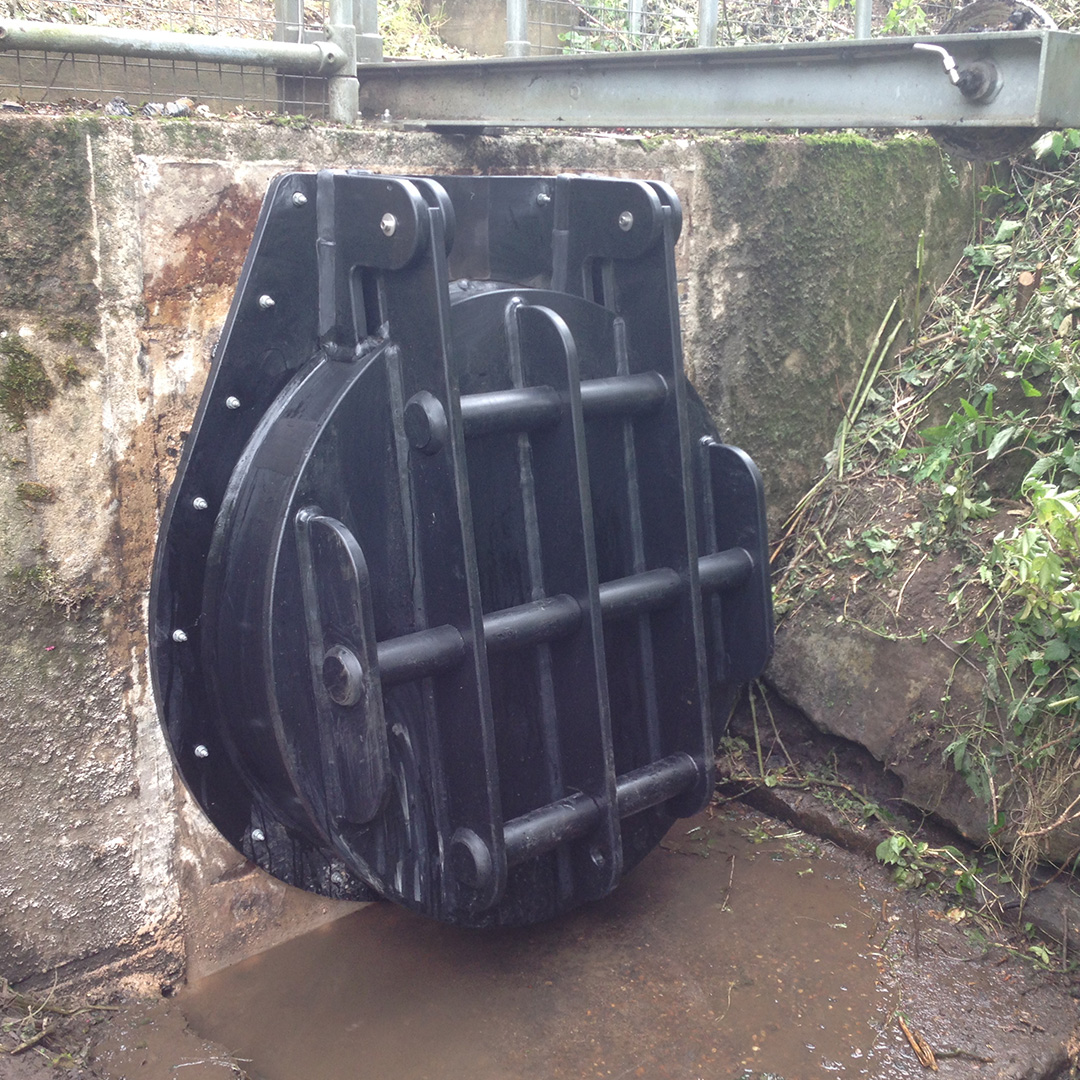
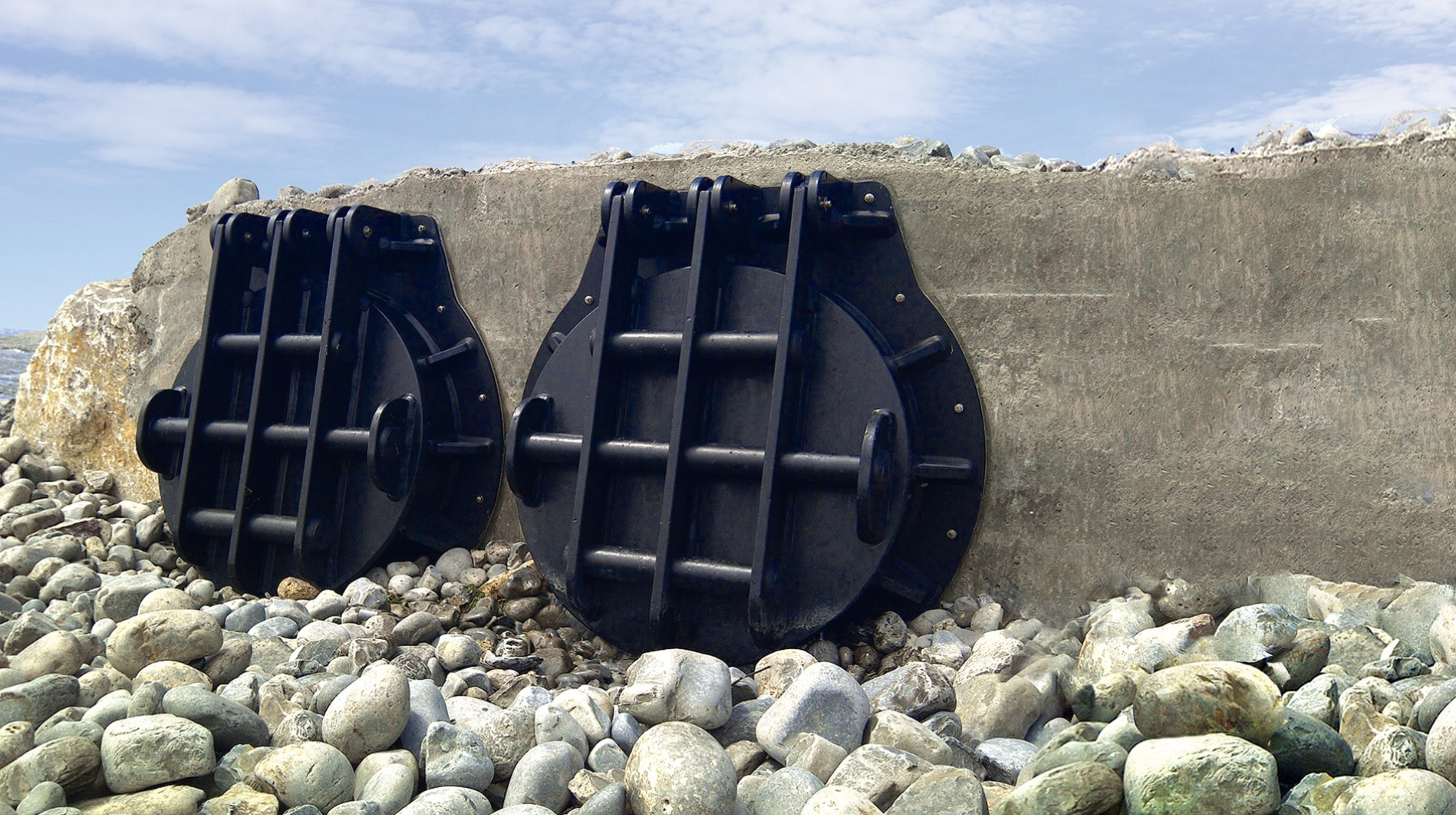
What does a flap valve do?
The importance of a flap valve only becomes clear when things go wrong – during heavy rainfall, for example, or when backflow occurs. At that moment, one thing needs to do its job without hesitation: the valve. It prevents water from flowing back into the system, protecting against damage, disruption and costly consequences.
What makes this type of valve so effective is that it operates entirely on its own. No power, no switches, no manual control. Water pressure alone determines whether the valve opens or closes. It’s a simple, clever and extremely robust design.
The technology behind the valve
A flap valve works on a straightforward principle. As soon as water pressure builds from the inside, the valve opens automatically. If water attempts to flow back, the flap shuts by itself. The pressure does all the work. That’s what makes this solution so reliable – it responds immediately, every time.
Modern flap valves are made of HDPE, a plastic material that causes very low hydraulic resistance and offers excellent resistance to moisture, chemicals, temperature fluctuations and UV radiation. The material is strong but lightweight, which improves sensitivity. Even low pressure is enough to activate the valve smoothly.