Stop log
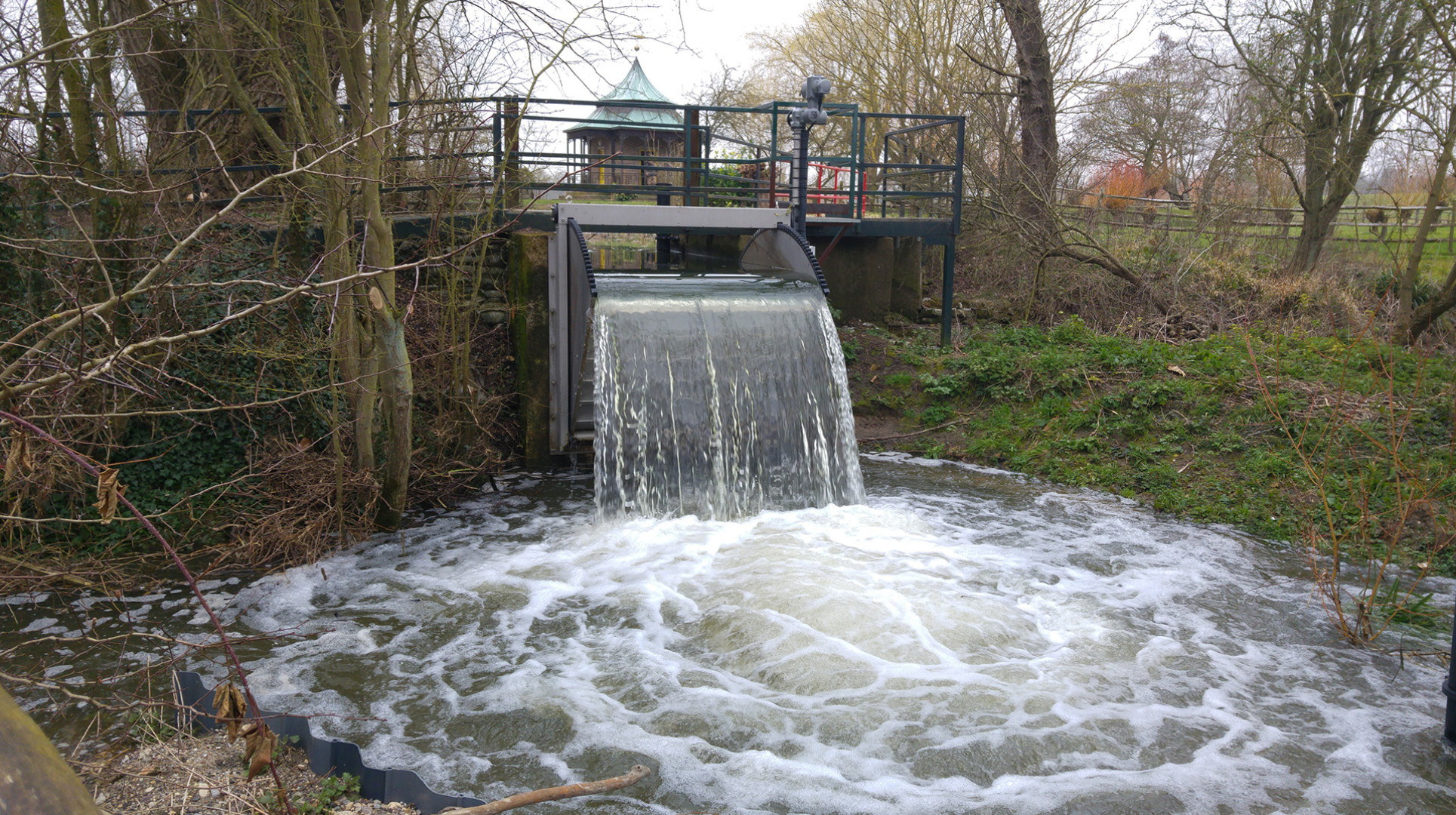
The stop log is a modular structure consisting of stacked beams within a vertical guide frame. It allows static adjustment of the overflow crest by manual insertion or removal of logs. This type of structure is typically used in systems without continuous operation requirements or where control flexibility is limited to seasonal adjustments.
It is particularly suited to agricultural or polder systems where robust passive control is preferred and operational simplicity is essential. The lack of mechanical components eliminates failure risk under harsh outdoor conditions. The main drawback is the need for manual intervention and physical access, which makes the stop log unsuitable for dynamic water management.
Key characteristics:
- Manual crest height adjustment through beam placement
- No moving parts or power supply required
- Optimal for static or rarely adjusted systems
- Applicable in gravity-based flow environments with low head variation
Tilting weir
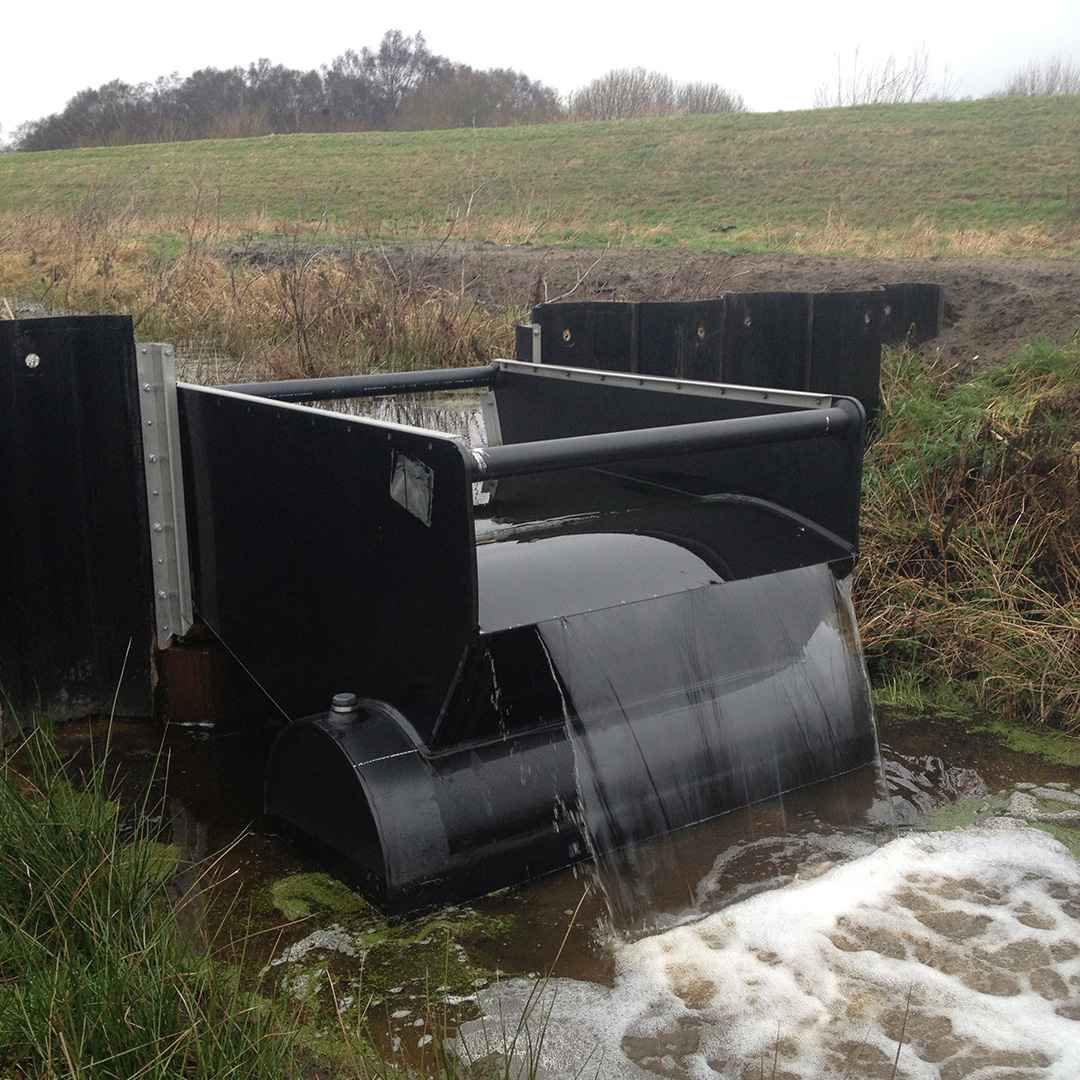
The tilting weir, or flap weir, is a pivoting structure that discharges when the upstream water level exceeds a predefined height. It can operate passively via hydrostatic force or be fitted with actuation for controlled operation. Unlike vertical gates, tilting weirs are often preferred where visual impact must be limited or where the crest level must remain consistent without mechanical lifting.
This system allows controlled overflow discharge while minimizing turbulence and maintaining ecological continuity in downstream flows. In passive variants, reliability depends on precise construction tolerances and blade balance. Actuated versions allow real-time regulation but require integration with SCADA or level sensors.
Typical use cases:
- Buffer basins, ecological zones, controlled overflow reservoirs
- Sites requiring low visual profile and low maintenance
- Systems where passive operation is acceptable, with optional remote override
Overflow weir
Overflow weirs, or fixed crest weirs, are passive hydraulic structures designed to regulate flow by allowing water to overflow once it reaches a predefined elevation. Typically constructed from concrete, stainless steel, or HDPE, they offer a simple yet effective method of controlling discharge without the need for moving parts. Compared to sluice gates, overflow weirs offer lower mechanical complexity and are ideal where constant or gradual overflow regulation is sufficient.
These weirs are widely implemented in urban drainage systems, combined sewer overflows, attenuation basins, and treatment plant inlets, where reliable passive flow control is required. Although not actively adjustable, overflow weirs can be designed with variable crest heights or combined with inflatable elements to introduce limited flexibility in operation.
Advantages:
- Passive and low-maintenance discharge regulation
- Ideal for managing overflow during peak stormwater events
- No mechanical or electrical components required
- High durability and operational lifespan